Words have power. The language we use tells people more about us than we like to think. Which makes you wonder why we don’t try harder not to sound like idiots.*
###
I was having a discussion the other day with my friend and we started by bantering back-and-forth about expressions we are too old to use or that are so overdone they should be retired. (This exchange went on for several minutes. We think we are very funny when we haven’t had our caffeine yet.)
Everybody’s Saying It
Me: “I can’t stand the use of “What happens in (Blank) stays in (Blank). The Las Vegas board of tourism should fine people whenever it is misused.”
Her: “I’m sick of hashtags. I run across one and think “Why do people throw them at the end of everything they post? I’ve used one ONCE, and then only ironically.” #overdone
Me: “Text speak should be outlawed altogether. We could force people to wear an emoticon or the @ symbol as a sign of penance. It would be red and we’d call it The Scarlet Symbol!”
Her: “The Hashtag is better.”
Me: “I think the @ symbol is closer to the letter A.”
Her: “You should definitely use the HASHTAG!” #Opinionated
For the sake of our friendship, we drop it. You’ll notice, however, that I eventually agreed with her. Another pet peeve rears its English head.
Me: “The phrase ‘Keep Calm and [Blank] On!’ where people fill in the blank with whatever thing they like. I saw one that said ‘Keep Calm and Bake On!’ with a cupcake instead of a crown. Stop just stop!”
Clerical Errors–Not Just For Clergy Anymore
We discussed what we were tired of seeing in writing.
Her: “I’m tired of seeing single word sentences. You know, where the author puts a period after every word for emphasis?”
Me: “Or, if you put it ironically: Overused. Periods. Must. Go.”
I couldn’t think of an example to complement this at the time, but since then, I would submit another particular annoyance—the word ‘Not’. Where people make a statement and then negate it with the single word ‘Not’ afterward. I just love this. Not.
Insults Add Injury
Then she proved to me exactly how far out of the loop I am, slang wise.
Her: “I’m tired of ‘Throwing shade.’ ”
Me: “What? I’ve never heard of that one.”
Her: “It’s an insult.”
Me: “Like ‘dissing’ someone?”
Her: “I don’t think anyone uses that one anymore.” (I swear she snickered when she said this.)
Her: “And ‘Butthurt’. I’m tired of ‘Butthurt’.”
Me: “That’s what she said.”**
Her: “Hah hah. Very funny.”
Me: “No, I’m tired of the phrase, ‘That’s what she said.’ I don’t really know the expression ‘Butthurt’ is it like ‘Asshole’?”
We devolve into a nattering Google search trying to confirm the origin of that one.
Her: “It means: ‘Overly annoyed, bothered or bugged because of a perceived insult; needlessly offended.’ I would have thought it had a more sexual meaning.”
Then she looks a bit further; she is scrolling the text when she stops.
Her: “Oh…someone here uses it to be degrading, as if it means rape.”
We’re both silent for a minute tacitly agreeing this isn’t funny and maybe we should just drop this line of thought. But, we aren’t over finding ourselves terribly amusing in general, if not in this particular instance.
You’ve Been Served
Me: “I hate it when I use slang that I am wayyy too old to be using: ‘My Bad!’”
Her: “I’ll confess, with a pre-teen running around the house, I’ve been known to drop a ‘Whatevs’ on occasion.”
Me: (Gasp) “No!”
She nods sadly and I shake my head in disbelief. We pause for a moment to digest how much respect we have just lost for each other.
Then we momentarily veer unto serious grounds. I may have climbed on a soapbox for a moment or two, before being overwhelmed by the dizzying heights of intellectual pursuit and falling off again.
Brown Shirting It
Me: “The use of the phrase ‘Nazi’ intending to be a clever slur for whatever someone feels like making fun of: ‘Grammar Nazi’… ‘Soup Nazi’…”
Her: “Feminazi.”
{Non-Sequitur Alert}
Me: “Speaking of Nazis, I just watched a memorial show about the holocaust this week in which two sons of Nazi war criminals met and talked about their respective fathers’ part in the genocide. It was shocking how much one son denied his father’s involvement—even with evidence put before him—he refused to believe his father was a bad man.”
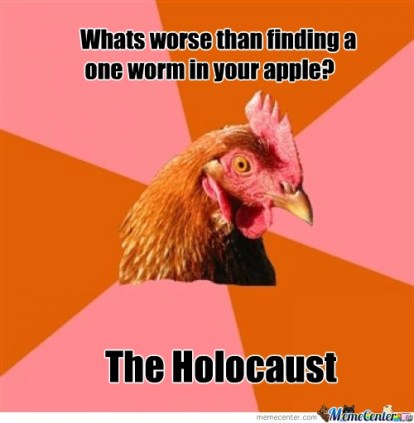
My friend no doubt said something very smart and insightful in response, but alas, I have forgotten what is was. Enjoy this Holocaust meme instead:
I love it best for the typo it contains.
And this one:
On a side note, I wasn’t aware there was a Holocaust Day of Remembrance. This week, all anyone could talk about was an album by Beyonce–something having to do with fruit juice. Instead, I watched a documentary about Niklas Frank and Horst van Wachter–sons of two high-ranking Nazi officials. PBS presented this in advance of Holocaust Remembrance Day which was May 5 this year. The Last Picture of Hans Frank aired May 2 and it was an excerpt of a larger documentary: My Nazi Legacy: What Our Fathers Did. An article in The Telegraph provides insight into the conflict surrounding those who remember and those who still deny the Holocaust–in part or whole.
Now Back to Our Regularly Scheduled Blog, Already in Progress
Me: “I have wondered how entire countries could have participated in the atrocities during the Holocaust; how did so many people fall in line with the belief that killing people was a moral and just act? And now, listening to the bile spewed by Donald Trump, I see how it can happen.”
We stumble through the hazards of discussing politics on a gray day. It helps that we are both Die-Hard With a Vengeance liberals but the topic should come with a trigger warning:
Danger: discussing the buffoons currently running for office may result in catatonia, convulsions, or the desire to hurl yourself off a tall building. If over-exposed, seek the nearest bi-partisan affiliated medical center or move to Canada.
Just the day before, Ted Cruz took his campaign off life support, and as a nation we were equal parts relieved and horrified by the confirmation that Donald Trump was the de facto Republican candidate.***
Me: “I heard what’shisname dropped out of the race, finally. I can never remember his name. You know, the first runner up?”
Her: “Cruz. Ted Cruz.” [Read this with a James Bond 007 emphasis]
Me: “And now the Republicans are fighting about whether to back Trump or not. I am terrified of the prospect of a Trump presidency.”
Her: “I just can’t watch the election coverage any more. I am so sick and tired of hearing the hateful things Trump says and then there are his supporters who are proud of their racists, sexist, bigoted views. I’d rather go work in my garden.”
And on this, I have to agree. After listening to people sling political bullshit, it’s nice to find a use for it by going and fertilizing the plants—metaphorically speaking.
Our conversation drizzled to a halt and we signed off Skype and returned to the minutia of daily life. But the conversation stayed with me.
The Skinny
I’ve been trying to parse out the meaning of it all—what I think about the mixed bag of ideas: well-worn aphorisms, iconic statements (#oversimplification), misused marketing jargon, and the fact we’ve reduced the election process to tweet wars. It’s become a contest for who can fling the most monkey dung without having any stick to them! When I couldn’t wrap my head around an answer, I did what most people do. I looked to the internet.
NPR offers a meaningful look at the effect of a meme-oriented mindset by reporting on the comparison of Donald Trump with Adolph Hitler. The article references Godwin’s Law of Nazi Analogies—and it gave me a momentary pause for thought to consider my own eagerness to pass on a witty slam against a political adversary. Am I part of the problem when I partake in the Olympic event that is the hundred-yard dash to judgement on something the other side has said?
Democrats like to vilify the enemy as much as the Republicans like to burn Democrats in verbal effigy. Tit-for-tat backstabbing is the mother tongue of politics. Rhetoric, polemics and personal insult take the place of a real discussion. Issues are boiled down to a symbol and a word or two.
In the political arena, center stage is given to the loudest actor with the best lines. (Who remembers anything Guildenstern said? Anybody? No? No, it’s all about Hamlet. Hamlet said this. Hamlet stabbed Polonius. Hamlet left Ophelia to drown. Hamlet has fake hair and his wife is an immigrant. Hamlet, Hamlet, Hamlet! No one mourns poor Guildenstern, except maybe Rosencrantz and even then it was probably laced with self-pity. In this analogy, Guildentstern and Rosencrantz are played by Ron Paul and Jeb Bush.)
#BitPlayersDie
When all you have are sound bites, it is hard to digest and regurgitate an educated opinion—and apparently no one really wants a nine-course, fact-laden meal when they can swallow nuggets of pseudo truth instead. Sadly, the toy that comes with this Un-Happy Meal is whoever is elected. It is the Age of Oblivious and the one with the most likes wins.
#Spoiler:WeAllLose
Where was I heading with this? I’m not entirely sure. This started out funny and lighthearted and then spazzed into a quasi political rant half-way through. Suffice it to say, there is something dangerous about relying on pat answers or worn-out catch phrases to represent our opinions. It is just too easy. And as the poster hanging on the wall of my social studies classroom in high school said: “For every complex problem, there is an answer that is clear, simple, and wrong.” H. L. Mencken****
#IronicFootnote
Asterisk Bedazzled Footnotes:
*Donald Trump, I’m talking to you.
**Okay, I’m totally making up this reply. I only came up with it much later when my brain gives up all the wittier things I might have said if I only could have thunk them up at the time.
***De Facto is an abbreviation, the long form is: Eligendi asini, de facto producit ventum de inmundo. (For those of you too lazy to use Google Translate: Electing an ass in effect produces a foul wind.)
****And just to prove how dangerously full-circle this reference is, Wikipedia describes H. L. Mencken thus:
“His diary indicates that he harbored strong racist and antisemitic attitudes, and was sympathetic to the Social Darwinism practiced by the Nazis.”
So, I can understand how Donald Trump could cite an opinion which originated with Mussolini without knowing it. But, once you know, you have to realize your words might not be conveying the message you think.
There is a manic busyness to butterflies that reminds a person that life is short. On average, a butterfly lives about a month, which is practically a luxury when compared to the mayfly which lives as an adult for less than a day—time which is basically spent reproducing before giving up their tiny ghosts. There is a lesson in this, probably.*
It’s hard to take a bad photo here, but going out at noon when the shadows are flat helps.
Because the human life span promises an extravagance of time, we tend to play fast and loose with our possibilities. We waste time to a degree that that Mother Nature shakes her head and throws plagues and severe storms at us for the occasional wake-up call. I was reminded of this while photographing butterflies at Meijer Gardens this weekend.
“Tower to Echo leader, Bravo leader is coming in hot for a landing. Prepare crash teams.”
Saturday, I shutterbugged my way through hordes of Vitamin-D deficient, pale mid-westerners who frolicked in the sun like they forgot what the glowing ball in the sky meant.** It was a good day to be out. Bright, warm. If I hadn’t had a raging headache, the day would have been perfect.
“Abort landing, Bravo. Pull up! Echo has claimed the landing leaf and isn’t budging, the wanker! Tower out.”
A babysitter sprinted after my son who was like a hound off his leash, allowing me the privilege of a leisurely inspection of the Japanese Gardens where incipient spring threatens pollen bombing if the warm weather continues.
“I’m ready for my close-up, Mr. DeMille.”
In my haste to worship the sun god, I neglected my hat and sunscreen routine. After ensuring that I’d exposed myself long enough to accrue a good case of sunstroke, I scampered inside to jam myself between iPhone happy strangers all trying to immortalize terrorized butterflies in unwilling selfies in the arboretum.
Black and White – A dramatic pause on a posy.
April signifies the end of the Butterfly Exhibit—a seasonal tradition at the gardens guaranteeing huge crowds as winter slips its stranglehold on the state. It also signals the end of the butterflies’ tiny life spans. Maybe it was just me, but their ragged wings and spastic flapping seemed tragic even as I too tried to pin their image to a digital cork board. It’s a macabre pastime only ameliorated by the lack of chloroform and a ‘humane’ practice of letting the poor things live out their sexless lives, out of season, trapped in a giant glass prison. I quash my guilt in order to enjoy myself.
Would it kill them to introduce one female into the group? Would it?
Throbbing skull aside, it was a perfect day. [Cue Ominous Music.]
We’re walking back to the car when, suddenly, I realize something is blocking the vision in my right eye. There is a shadow pantomime something like a stick and a jellyfish sword fighting wherever I look. I’ve had similar incidents in the past, but nothing on this scale. I’m not the brightest girl in the world, but, taking the headache into consideration, it occurs to me something might be wrong.
A visual representation of the butterflies churning in my stomach.
I scurry home, upload my pictures (because, hey, priorities), and chat with a friend to ask her opinion. She agrees, it is probably a floater and it’s no big deal. Because I suffer a certain amount of paranoia married with an overactive imagination and access to the internet, I come up with a different conclusion: I’ve detached a retina and I could lose my vision altogether.*** I call my friend who is a doctor, she says, “It’s probably nothing, but at your age with your severe myopia it could be a detached retina. If you can, you should have it looked at.”
Butterflies are fluttering, nihilistic harbingers–just better dressed than most.
Fast forward to an emergency visit to an ophthalmologist’s office, and she confirms it: “It’s just a big floater. We’ll have you come back in three weeks to see how it’s doing.”
Looks harmless. Total death merchant.
So, there you have it, butterflies are pernicious omens of ill will and doom, signifying the end of all things. Of course, that could just be the dancing jellyfish in my eye playing tricks on me.
Asterisk Bedazzled Footnotes:
*Mayfly mantra: more sex, less effing around with laundry and shit.
**We had. I call it winter amnesia.
***This is aptly called free-floating anxiety. Also, part of me wants to call this a detached retinue–because all of the voices in my head have abandoned me to run around in a panic.
Part III–the last in my series on Herrick Library’s Get Published 2016 seminar–will address the elusive topic of what things you should avoid when writing your master work. This isn’t a how-to so much as a how-not-to. [To catch up, follow the colorful links to review Part I and Part II .]
Borrowed from Humoresque by Loren Fishman at Toon Pool – may he forgive my larcenous ways.
*****
By the end of a six-hour marathon session of talking, the flower may not have lost its bloom, but the petals were wilting (and screaming to stretch already). I still enjoyed the camaraderie of the occasion—established writers, publishers, editors, joining in an effort to help new writers learn the ropes of publishing—but my note taking definitely took a nosedive.
The moderator asked what advice each person had for the beginning writer. As if a lid came off a pot threatening to over-boil, the panel devolved into a session of “Please for the love of god—no. Just, no!” pet peeves…ah, I mean…appeals.* Let’s see if you can pick out all the points raised in this sample text I’ve constructed for a story I’m calling:
A Godawful Mess
Jack said, “I need to pee.” as he rose from his bed. At the door he started to go, then he hesitated, stopping to scratch his pertinent private parts as if to suggest other options, but then went to the bathroom.
It was looking like it was going to become a boring day like every morning before and every boring day after forever and ever. His wife, who hated him with a passion that otherwise could only be found on her favorite daytime soaps, under her morning breath sparkled: “Just once, it would be nice if That Bastard,” her pet name for Jack, “woke up on fire in a tunnel full of rats with rabies and syphilis.” (Whether she meant the rats had rabies and syphillis or Jack did was anybody’s guess because she was imprecise in her attribution.) But his wife didn’t dare say this too loudly enough to chance to be heard through the cardboard thin walls of their hand-me-down trailer, in case her bastard husband who cheated on her since the sixth grade dance where he had decided to invite her, only to then decide to dump her for her best friend Brittany who later dropped out of college to become a poll dancer and went on to prancingly marry a wealthy plastic surgeon, heard her.
Tiffany crooked her head sideways to crane like a Frasier fir in a hundred-mile-an-hour wind and look across the room at Brittany-The-Bitchany’s portrait on the wall where her husband had punched a hole in a drunken rage following being fired for embezzlement which led to their current nearly homeless situation.Tiffany had a moment to consider a lengthy backstory, but she felt her gorge rising and decided to vomit in the laundry basket instead, scaring the cat.
Her mouth was whipped with the back of one hairy hand, Tiffany pointed a finger at the picture while picking up a dart to throw it. She missed, and instead hit PussyWillow the Third, scarring the cat. The Bastard would have said ‘Ten Points’ if he weren’t peeing like a race horse and stinking up the place. Damned asparagus festival. The sound of flushing woke her briefly from her stupor.
Wait…where was she? Tiffany began to stumble to her feet and think. Oh, right, reflecting on the duplicitous nature of a back-stabbing, would-be, erstwhile ho.
Brittany’s head covers the hole now and Tiffany likes to think someday That Bastard will punch Brittany’s face in. Brittany with her perfect hair, perfect family and perfect life. Tiffany’s complaining liver became suffused with bile and sneered at the former blond, high school prom queen/cheerleader/slut. Type-casting was rife in her opinion.
Waggling the pointed finger, Tiffany considered her foe with impunity.
“It doesn’t matter how far you’ve risen, Bitchany.” Tiffany brayed donkey-like through smoke-blackened partials, flipping her greasy hair for emphasizing measure. “I know how low you are willing to go–all the way down according to the varsity football team. I know those red-headed kids ain’t you’re husbands. And I know people in even lower places who are willing to pay for juicy gossip.” Tiffany chuffed and snorted her pointless speech with kale-like bitterness. She emitted sounds like a congested diesel engine on its last piston. Her glass eye shivered like molten jelly.
Brittany was stubbornly oblivious-her plastic smile oozing insincerely and unctuously from the flaking-off fake gold frame on the wall. Her capped teeth sparkled with egotistical glee under the glass. Her eyes said with extreme vivaciousness, “Well, lookee who here was a success and who got fat and cheated on after all. Pooh to you, Ms. Valley-dictorian. I guess getting a boob job was the right career path after all.”
“Shut your mouth, whore!”She said to her former best friend.
Spittle flew with projectile fury-spattering the frame in a lacy spray of flume and bile. Tiffany got right up in Brittany’s celluloid face and decided to consider to go get a shredder to deal with the conniving leg-spreader who’d done the nasty with Jack and then toasted Tiffany with the news at her bachelorette party.
“Good luck with Mr. Two-and-a-half.” Tiffany mouth measured mock suggestive, surprise as her fingers shrunk to the widening eyes of the circle of drunk family members.
Grandma had to about keeled over with shock and the minister’s wife prunned up something fierce. Mom still gave That Bastard funny looks when they visited her in prison. Daddy, may he rest in peace, had just laughed before shoving another dollar into her cousin’s g-string.
Not as drunk as she had been that night, Tiffany finally found the words that summed up her rage, jealousy and the vacillation of someone who hates the only real friend she’d ever had, except for the imaginary kind. Her hands shook like a rattler warning of an imminent bite, she said, “Bite me.” to the frame on the wall.
“What’cha bitchin ’bout now?” The Bastard belched each word with criminal flatulence for an oncore.
Over his shoulder, Brittany winked from the frame and blew Tiffany a kiss.
“Nothin.” She said.
“What?” He said.
“You heard me.” She said.
“Oh yeah?” He said before cracking her a good one.
“Touche,” she said.
“Merooooooow?” said PussyWillow the Third with a suggestion of a furball at the end of its vowel-laden yowl.
That Bastard said menacingly, “Shut up, cat.” before kicking the half-blind creature aiming for imaginary goal posts through the upright ends of the three-poster bed.
Regaining her feet, although she’d lost a high heel somewhere as she stumbled to a drunkly dignified pose, one bra strap slipping un-suggestively down her rounded shoulders, she said. “Happy Anniversary, dear.”
What she meant was, “I hope you die a thousand deaths under a scorching sun with fire ants chewing a path through your cocaine damaged nasal passages and eat the last unpickled neuron which keeps you breathing, you fart-breathed buffoon.”
“You too,” he breathed Johnny Walker on a nine-day bender back at her.
One of them was going to die a painfully ironic terminal death today…sadly, it was going to be PussyWillow the Third, but that is a story for another tale. Mostly we will just have to wonder.
Believe me, that was almost as hard to write as it was to read. Most of the mistakes are on purpose. Feel free to assume that any mistake in my writing henceforth is a test for you to pass. Your welcum. (Intentionally bad for you grammar pedants.) Which leads me to our panel’s most prevalent opinion–fundamental writing skills matter.
English Teacher Vindication
The most basic lament about first-time submissions was surprising—instead of a commentary on plot, character, or pacing, the panel agreed, what a publisher wants to see most is clean writing that is free from errors. Writers should, “focus on grammar—the publisher doesn’t want to have a lot of work to fix.” In addition to spotless grammar, the language mechanics have to be physically possible. One panelist said, “Eliminate flowery or impossible speaker attributions. You can’t smile or laugh dialogue. Stick with ‘he said’ or ‘she said.’ In a dialogue between two people it is possible to avoid attribution or just do the minimal if it is well written.” Simple fixes such as these are the key to a clean manuscript. Matthew Rohr suggests writers need a checklist to use as a guideline to proof your work, “When I am writing a story, the first and second draft are rough outlines—the second draft is when I edit with a check list of things I watch out for: grammar, passive verbs, etc…” Once you have the skills of a ninja grammarian, you are ready to move on to the fun stuff: getting to the nitty gritty, low down and dirty, totally balls-to-the-wall annoyances of choppy writing.
Each writer had their own particular focus for what distracts the reader from making it through the minefield of bad writing.
Flashback = Drawback
Sue Ann Culp eschews the tried and true flashback, stating that the first chapter of the book should stay in the present. “In the first chapter there should be no back story.” Apparently, any time a writer stops the action this causes “broken narrative—don’t stop for backstory.”
Bad Bedroom Scenes
Sue Ann Culp also begged writers to avoid a certain type of bedroom scene. “Please stop writing your character getting up in the morning! Nothing of interest happens in the course of an ordinary day. Skip to the part where something different happens.” She did amend this blanket statement by adding, “Of course, if the story beings with ‘I woke up in a tunnel on fire,’ that’s a little different.”
On Introducing a Scene—How Not To:
“Please no Wikipedia entries detailing the story building of the world you’re creating.” Tim Rohr. “Though, it’s not a bad idea to write your novel as a short story and then back-scaffold out of it to find the plot points the story is going to follow.”
In his typically succinct fashion, Tim Rohr said, “Don’t lead with ‘Jack said.’”
Infinite Infinitive Injunctions
Tim Rohr’s writing process involves a lot of things to avoid, in particular, he suggests writers keep a look out for particular infinitive constructions. “Infinitive makers tend to flatten the narrative. Don’t use ‘to start’, ‘to begin’, ‘to proceed,’ etc…” He cited examples:
Instead of ‘He began to study…’ write ‘He studied.’
Instead of ‘She started to become concerned…’ write ‘She worried…’
Once you start to see it, it is easy to recognize where pacing begins to lag. “Whenever writers put infinitives into a sentence it slows the reader down and takes the legs out from under the action.” Tim Rohr prefers the focus to be on the movement of the story. “I ask myself, ‘Is the writing self-aware?’ In an action-packed scene, the sentences get shorter.” He ended with his pet-peeve: “I hate this type of sentence: ‘I hesitated but then went…’ Don’t do that.”
Adverb Annihilation
Sue Ann Culp apparently agrees with Stephen King who holds the opinion that “…the road to hell is paved with adverbs.” She had this to say about the pesky, unnecessary constructions: “Massacre the adverbs! Adverbs are a lazy way of writing and people over-use them. The dialogue should do the work. The body language that goes along with it will tell the story. Don’t feed me ‘Menacingly! Oh, and read everything out loud. I read out loud and my dog loves to listen to me.” Pet pronouncements aside, I have to agree with what she and the estimable Mr. King are saying—mostly. Sometimes, no other emphasis will do. Just be certain adverbial inclusion is crucial, or prepare to be skewered by overzealous editors with giant, red pens of critical justice.
In Defense of Decent Dialogue
The presenters segued to a discussion of dialogue and recommendations flew past. Sometimes, in the heat of writing, you don’t recognize the error of your ways. Matthew Rohr pointed to the obvious solution. “You need to have a list of things to cross-check when you think you are done and ready to submit. For me, I check attribution—the he said, she said count. If there are fifty ‘saids’ in a 200-word paragraph—that’s bad.” Matthew went on to recommend samples of dialogue from the current anthology from Caffeinated Press. “One of the stories by AmyJo Johnson in the Brewed Awakenings anthology has a story with great dialogue. And Melanie Meyer’s story “The Watcher on the Island” is another.” Fortunately for you, I happened to purchase a copy so I am able to report that he is quite right to recommend these authors. I liked both short stories very much, but going back and reading for the impact of dialogue made me think about why I liked each story and how the use of dialogue impacted my opinion.
The story, She’s My Favorite by AmyJo Johnson, uses dialogue to drops hints about the mystery between sisters in a futuristic world. The key to this character-driven narrative is the unusual, stilted exchanges between the main character and her emotionally distant twin.
“Sister, how old are we?” Lily had asked, when they were alone one evening.
“Five.”
“How do we know when we are six?”
“Mother will throw a party, where other kids come over, bring toys for me, and we get to eat cake. You’ll get to watch, like at the playground.”
“A party?” The word sounded magical to Lily. “Why haven’t we had a party yet?”
“Last time, we were too young. The other kids told me about parties and that they start when we turn six.”
In this short story, the author uses the telling questions to reveal the unequal treatment for the child described as ‘Other’ but not necessarily the reason behind it until nearly the end. There is no backstory to speak of and little description of the setting beyond the bleakness of the narrow world as viewed through Lily’s eyes. Without beating the reader over the head, the author increases the understanding little by little with short conversations between twins who are raised in very different ways. The simplicity of the scenes and the questions which go unanswered tell much more than a detailed exploration of world building that occurs in larger works. Conversely, in The Watcher on the Island, by Melanie Meyer, the everyday exchanges between a boy and his playmate do nothing to raise suspicions—it is the setting and circumstances of the relationship which suggest that something is different about Tartok’s friend, Raven.
“Do you have time to come see the cave?” There are icicles there as long as my arm!” Raven asked excitedly.
Tartok looked to the sun, which was only a hand-width from the horizon, and said, “Probably not today. It’ll be dark soon and Mother hates when I am out after dark.”
“Alright, But if we don’t go tomorrow, they will melt.” Raven got to his feet and brushed dirt and dried bird droppings off his pants. “You’ll come to play tomorrow won’t you?”
“I’ll try as hard as I can. It all depends on when the Japanese patrol comes past, Mother won’t let me out until they are gone.”
Raven just shrugged, and walked up the hill alone as Tartok walked back to the lone fishing hut that clung to the battered shore. It looked like it had been abandoned for years, and Tartok knew that was the point. It didn’t look very inviting. Still, as the winter wind blew around the rocky cliffs, Tartok found it much better than this otherwise desolate island in the middle of nowhere.
In this story, dialogue does not work alone to set the stage, but it does realistically imitate two boys playing as if in an ordinary world. Tartok’s matter-of-fact acceptance of Raven’s friendship on an otherwise deserted island gives the reader a chance to identify with a lonely boy’s ability to ignore obvious questions. There is a magic to a child’s willing suspension of disbelief in time of war and privation—the simplicity of their exchanges leads the reader to believe the impossible must be true. Whether stilted and painfully correct or casual and childlike, the dialogue is a mirror to the character and the character a window to the soul of the story. Being able to recognize when you have gotten it right is the hardest part.
Dialogue works best that sounds believable, but it surprisingly hard to create. In researching the topic, I ran across an excellent article on the subject at the Aliventures Blog. It offers some links to the mechanics of formatting dialogue and identifying the mistakes neophyte writers are prone to make. And on that subject, our presenters had a few recommendations.
Well written dialogue sells the reader on the story; it is the frosting to the cupcake. Yeah, you might have a moist, cake-y concoction, but a story is always improved by a swirl of delicious dialogue.** However, if you don’t layer it just right, sticky dialogue might leave your readers with a bad taste in their mouths. For example, Jason Gillikin is passionately opposed to clunky speeches: “Don’t over-prescribe the dialogue. Ellipses make me mad. Let the reader draw their own conclusions.” Writers fall in love with their words—to the point even professional writers might miss glaringly poor construction. The solution to this problem? It’s as easy as a robotic voice-over. AmyJo Johnson recommends a program which will let you hear just how bad or good your dialogue is. She recommends writers “Use ‘Open Office’ as it will read your work to you—in a horrible, automated voice—but at least you get to hear it.” Once you listen to just how bad it sounds, flat dialogue starts to stand out and you are able to identify the error of your ways and eliminate it from your writing. So now you have a better idea how to put words in the mouth of your creation—but how do you decide whatexactly you are creating?
Pants Versus No Pants
The panelists were asked what approach they preferred when starting a novel—are you a planner or a pantser? The consensus? Most people are a little bit of both—or at least maybe they should be.
If you line up a row of writers and asked them whether their process is highly structured or flows organically from a primal literary spring, expect there to be a giant line drawn in the sand with die-hard opinions on both sides—at least, at first. “I’m a planner.” Tim Rohr said succinctly—as if that said it all. His brother, Matthew Rohr waxed a little more poetic—and from the other side of the fence. “I have no use for planning. But I recommend that you pair up with whoever is an opposite to your writing style. My brother is a planner and we have bounced things off each other.” It’s all well and good if you have someone to bounce ideas off of, but in a pinch, sometimes your characters can tell you where they want to go.
What is a writer to do when the road ahead isn’t so clearly mapped out? Amy Jo Johnson, recommends you let your characters out to play. “I’m a pantser. I like to write up my characters in a world, like The Sims, and let them loose and see what they do. You have to find ways to get into your characters’ heads.” This laissez-faire attitude didn’t work for everyone however. Jason Gilliken was unapologetic about a more meticulous approach. “I’m a planner.” With that said, Jason did recommend however that even a planner needs to recognize that a work is dynamic, subject to change and will have an organic core. “I recommend you leave the first draft alone for six months. A cold read is a refreshing start.”*** Every writer knew what their preferred method was, but did not suggest one method was better over another. Heads nodded as each person presented their take on the most difficult of journeys—from the beginning of a story to a satisfying conclusion. Sue Ann Culp is a self-professed planner, but even she concedes that flexibility is a key attribute. “I think we are all a bit of both. But when I get in the car, if I don’t have a direction, I go—[insert wishy-washy hand gesture here]—SWISH. I have to have an overall road map from the start.” Right, so it’s great to go sightseeing but if you lose the map, expect to make unnecessary detours and backtracking in your writing.
Leaving the presentation, my head buzzed with the many ideas, recommendations, and admonitions. In general, I like to write from my heart on subjects with which I am familiar. This series was a step outside my comfort zone. It was a struggle to condense the advice and weave it into a whole cloth for you to wrap your head around. I am not entirely sure I succeeded, but I am glad I made the effort. Of note, there was one portion of the session I did not write about. It was the live critique of work submitted by attendees of the conference. As the audience looked on, each work was diced into so much blow fish sushi. Fugu might be delicious, but one wrong slip and it is also poisonous. After listening to the points the editors and writers made about other people’s works, I was grateful mine hadn’t been chosen. Because I do not have the original works to reference, I felt the points raised in the critique—though helpful to the writers and audience—would not make sense out of context. Then, I had a bit of luck. At the end of the session, I won a prize: a critique of my work by editors from MiFiWriters.org. When I have heard back from the reviewers, I will let you know what they had to say. Just as soon as they stop laughing.
Asterisk Bedazzled Footnotes:
*Feel free to let me know how to correctly punctuate this sentence. I rewrote it several times and finally gave up. Sue me.
**Mmmmmm, rich and tasty dialogue. Chocolate ganache colloquy is my favorite.
***However, waiting four weeks after the event to write a final installment blog post is ill-advised. You end up with the rambling mess you see above you.
Sue Ann Culp – playwright and author, writing professionally for over twenty years. Her fiction has appeared in magazines such as Wee Wisdom and Kaleidoscope. Her stage play is being presented at the Holland Civic Theater, “The Lies that Bind” was named one of the top 100 plays of 2009 by Writer’s Digest. She teaches fiction writing for children and teens. Visit her website at SueAnnCulp.com.
Jacqueline Carey – New York Times bestseller, author of the critically acclaimed and award-winning Kushiel’s Legacy series, The Sundering epic fantasy duology, and the Agent of Hel contemporary fantasy novels www.jacquelinecarey.com.
Eileen Wiedbrauk – a paranormal fiction writer and Editor-in-Chief of World Weaver Press, as her bio describes, she is an editor, writer, coffee addict, cat herder, MFA graduate—among other things. Websites: World Weaver Press a mid-size publishing company andRed Moon Romance–a site that, by the look of it, just might warrant a sizzling NC-17 rating.
Kristina Wojtaszek (whose name I mangled in my notes) – self-professed former woodland sprite and/or mermaid growing up around the shores of Lake Michigan. She has a bachelor’s in Wildlife Management. Her focus as a writer reflects her interests in fairy tales, ghost stories, poems and YA fiction–published in World Weaver Press, in Fae, Specter Spectacular, and Scarecrow, and in Far Off Places, and Sucker Literary Magazine. Follow her blog at Twice Upon A Time.
Brittany Wilson – Treasurer and Chief Financial Officer of Caffeinated Press is a jack-of-all-trades — writer, editor, finance ninja, and NaNoWriMo Municipal Liaison. Brittany has a degree in investigative accounting and a minor in creative writing. She has earned a partial bachelor’s degree in Japanese.
Jason Gilliken – Director Editor for Caffeinated Press Jason earned a degree in moral philosophy and political science–apparently he is not adverse to irony–with minors in history, Latin, and comparative religion and is currently pursuing a graduate certificate in applied statistics from WMU.
Matthew Rohr (one of the Bookend Brothers, so named for their seating at the table)-writer and editor of short stories and novels in the Urban Fantasy, Historical Fantasy, Science Fiction, and post-modern, pre-industrial retro-futuristic steampunk haiku-funk fusion genres. (The last genre may or may not actually exist. He is still thinking about it.) He is a founding member of MiFiWriters and editor of various editions of the Division by Zero anthology.
Tim Rohr(The other Bookend Brother) – A graduate of Hope College, Tim is a writer and editor and one of the founders representing MiFiWriters – a Michigan Fiction Writers collective http://www.mifiwriters.org/ focusing on speculative fiction and producing an annual Michigan Writers Anthology entitled Division by Zero. He runs the Monday night writers group for Herrick Library. He can be found at his eponymous website.
AmyJo Johnson – Business leader and corporate trainer, personal trainer and enthusiastic participant in all things related to Minnesota athletics–Amy Jo leads CafPress’s marketing endeavors. Caffeinated Press
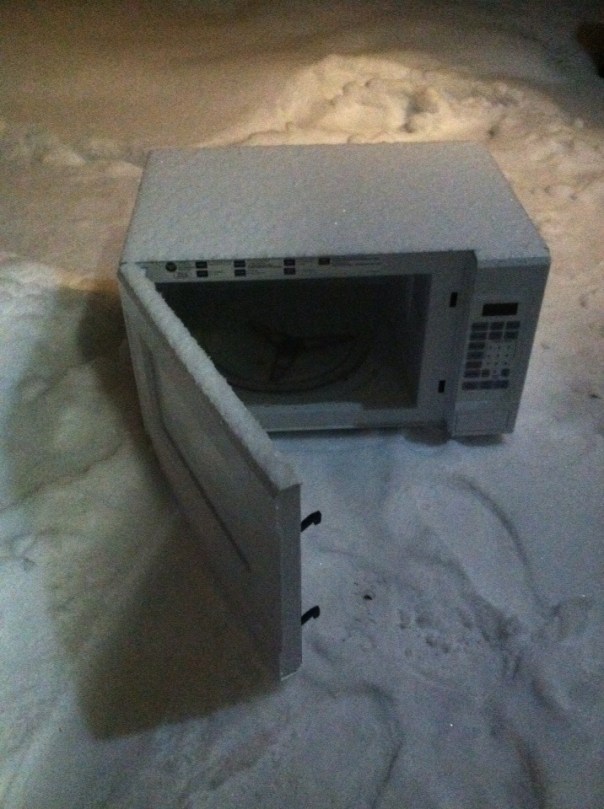
Now that’s what I call a “Frozen Dinner”. (Someone needs to photoshop ‘Olaf’ into the interior for me… or just use your imagination.)
According to my microwave, half-an-inch of snow has fallen in the past hour. No, my oven doesn’t possess space-age technology allowing it to pop the Orville Redenbacher while simultaneously measuring the barometer looking for a warming trends. In fact, it’s not even capable of popping corn correctly. Which is why my microwave is sitting outside in the snow and my windows are open to the elements in hopes I won’t set off the very expensive, ear-piercingly loud fire alarms.*
The reason my microwave is melting a rectangle of water outside my door (that it will no doubt freeze in place overnight), is because I dared to dream. After a day of ‘getting stuff done’ and ‘being responsible’, I decided to take a break, sit down, and watch a movie with my son. Then Netflix froze up and I thought that, while it rebooted, I would make a snack…
Apparently Netflix decided I didn’t deserve to see the ending of “Home” and, while I was fiddling with that, the microwave set its phazers to ‘obliterate’ and my sweet-and-salty popcorn did a Vesuvius. Distracted by ‘the purple screen of death’, I hear my son shutting off the microwave—a favorite thing of his to do. I’m turning to yell at him when I realize billows of black smoke are pouring out through the side vents. Anticipating my curses, the child turns the microwave back on. Of course, I yelled at him anyway…
“No! It’s okay to turn it off when it’s on fire!”**
So, I’m sitting in my snow suit, waiting for the smoke to clear and hoping that, if I ever again get the bright idea to try and have a relaxing evening, I will just skip it and go to bed. Apparently the Gods of Irony have me on speed dial.
Single Serving = “You’ve Been Served!”
Asterisk Bedazzled Footnote:
*My kitchen appliances really ought to come with built-in fire alarms and extinguishers. It would save time.
**One of these days I am going to write a book, Words I Never Thought Would Come Out of My Mouth. The first chapter will be entitled, “That’s Not Food”.
—–&&&&&——-
Please admire my new topic category: “Highly Flammable“. I see great things in my future with this one!
Advisory: the following contains irreverence for Star Trek, reference to bodily functions (aka toilet humor) and nearly-naked photos. You have been warned.
*
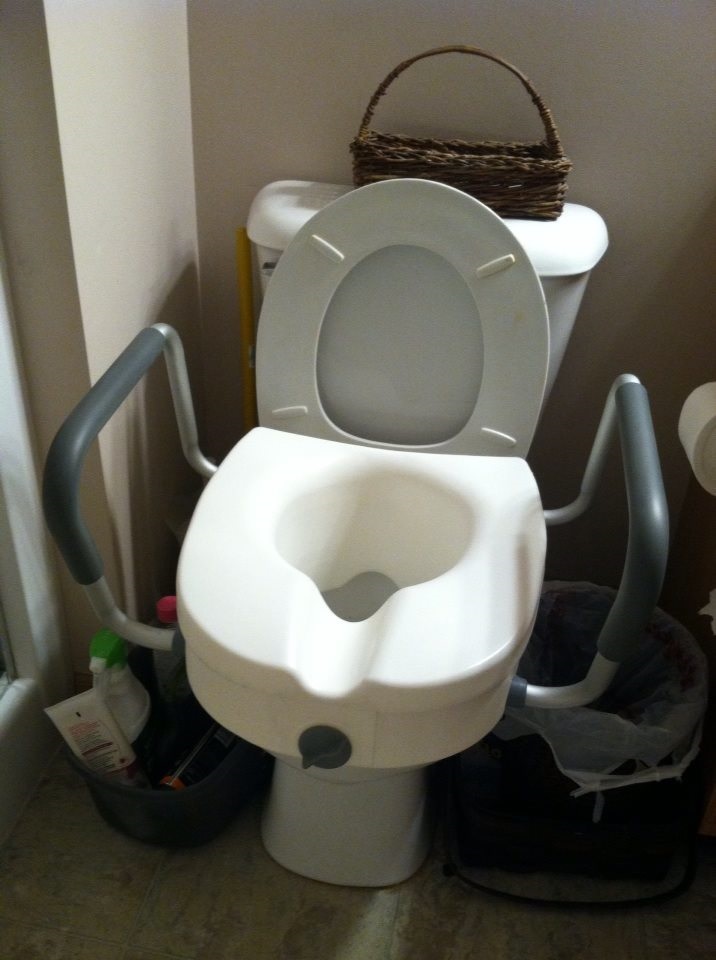
Just days before I was to undergo my hip replacement, this arrived in the mail.
ENGAGE!
I cannot tell you the relief of receiving the oddest looking thing ever to grace a commode. My first thought upon seeing my elevated toilet hover craft? “It looks like something from Star Trek.” Embracing my new command chair, I was able to boldly go to Spectrum Hospital and face the unknown. So sit back and enjoy this week’s episode of: Hip Trek. (Not a copyright infringement, at all.)
Spaced-Out: The finale to my front and rear! These are the voyages of the starship Enterpoop, Its six week mission: to explore embarrassing losses of dignity, to seek out new ways of putting on socks, to sleep like there’s no tomorrow…
Star Date: 0413.2015
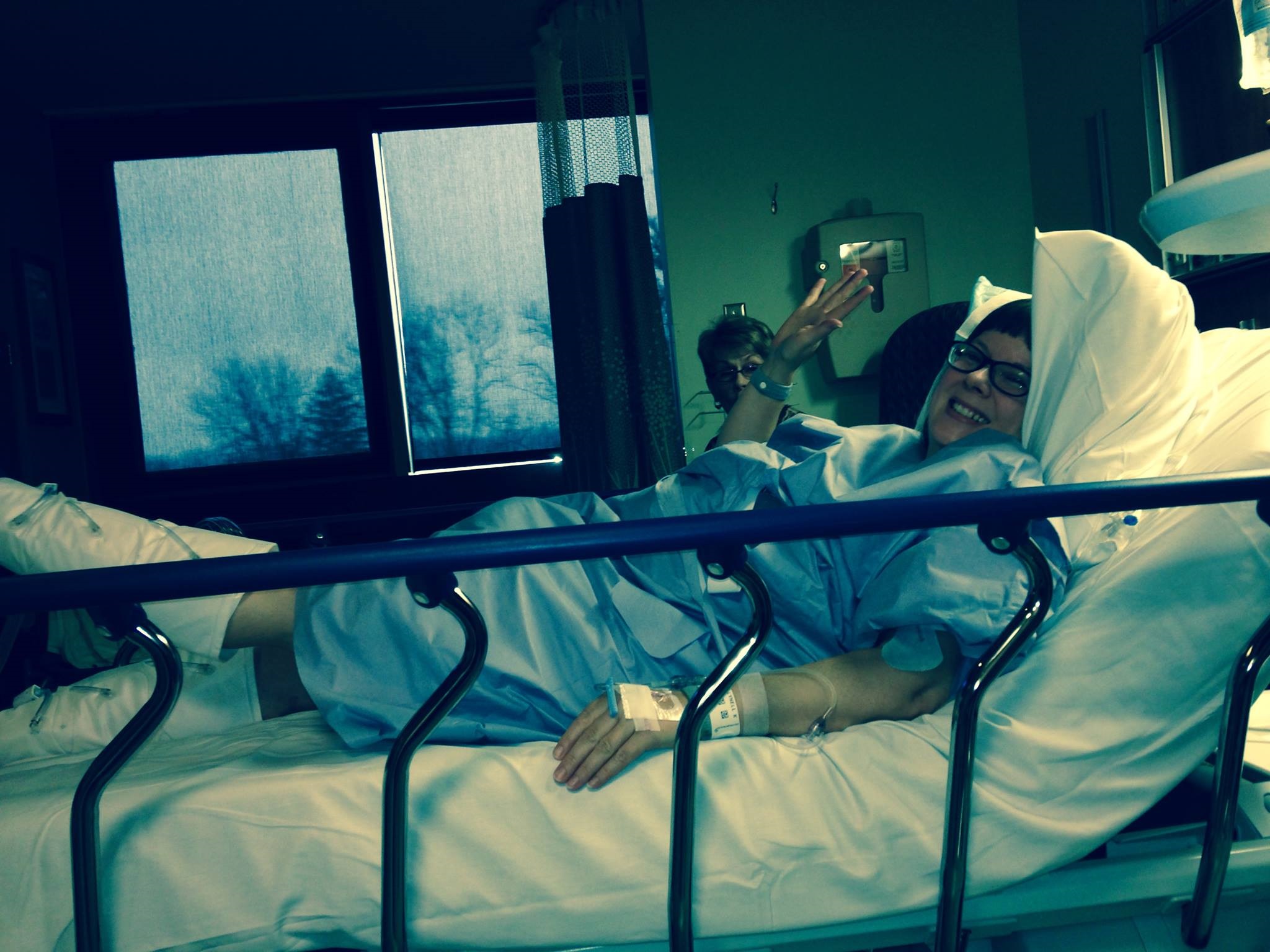
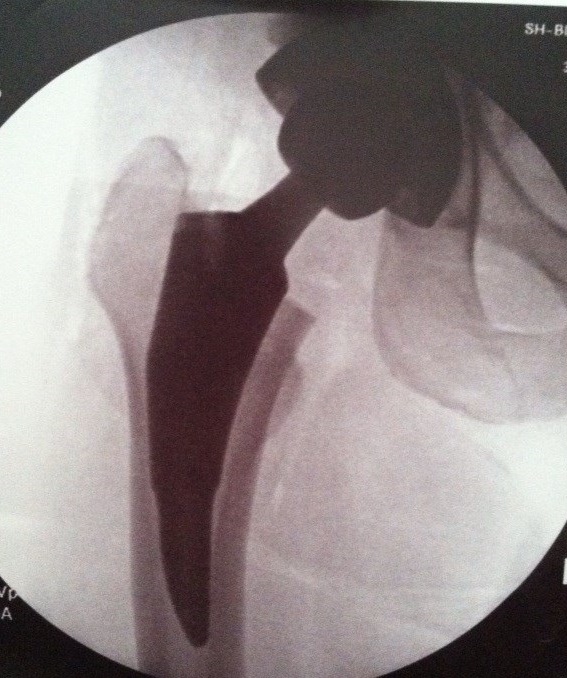
Acting Captain’s Blog, First Officer Reporting: The captain has been relieved of duty by the medical officer. We arrived at the planet Spectrum for a brief layover to augment the captain’s hyperdrive by installing a new dilithium crystal stabilizer.*
Staff arrived disappointingly clothed in green jumpsuits—a total breach of Hip Trek protocol which dictates that medical personnel wear tight, crushed velvet blue shirts with black pants or mini dresses with Go Go boots. As the procedure would take some time, the captain donned a space suit designed to make her look like a Macy’s Day Float…appropriate considering some of the drugs later prescribed.
As expected, the Captain’s bloated ego becomes more apparent out of uniform.
A nurse—most likely a vicious Romulan—by the name Phlebo ToMist attempted to excavate blood using an unnecessarily pointy object.
SHO’VA SHAK! (Okay, help me out, I think this one is from Star Gate) Let’s try Klingon: Qu’valth! P’tok!
The Romulan seemed disappointed when she finally hit a vein only to discover the blood wasn’t green after all. The captain suffered this all in silence.**
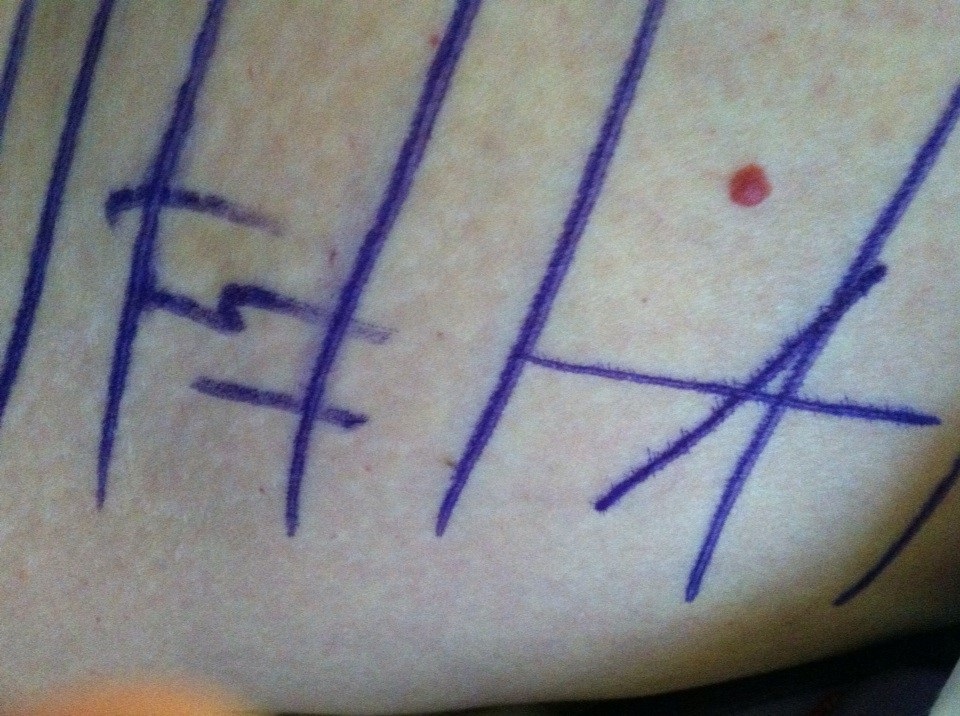
According to tricorder readings, Bones (aka the surgeon)–plotted a star chart on the captain’s hip.
Insert your own ‘map to Uranus’ joke here.
It looked as though he’d trained with Picasso. The captain was relieved to later awake from sedation to discover her nose reassuringly undisturbed.
The side effects of the procedure included a foggy-headed delirium wherein aliens appeared at odd intervals to monitor the implant and offer to take the captain to the head. The captain may have professed love to the anesthesiologist at one point. Fortunately Bones insisted she maintain near incapacitating level of narcotics in her system so any embarrassing details are but a blurry memory.***
Stardate: 0415.2015
Captain’s Personal Blog: Against medical advice, I have resumed my post. I will admit, Bones may have been right and the frag-bickle-lorum suggests I haven’t all my flurguls in a row. I won’t give him the satisfaction of knowing he is right though.
It seems as though my body has been taken over by an alien force that requires me to relearn all of my former functions using a variety of odd devices.
There is the sock-o-nator which works only in one direction apparently—which required repeated humiliating lessons before I figured out what I was doing wrong. Fortunately the crew was much less medicated and on hand to help out.
Please ignore the First Officer’s lack of uniform–it was pajama day on the bridge.
I have a new transporter that, while of limited distance, allows me to move my leg from the floor to levitate at a level that alleviates the pain in my port nacelles.
One to beam up, Scotty!
There is the claw-like apparatus I call the ‘payload retrieval device’; it has a myriad of uses but primarily helps me locate the Captain’s briefs.
Panties pictured may or may not actually belong to the Captain–she’s not telling.
Lastly, there is my space shuttle which helps me to drag my carcass from one staggering location aboard ship to another until my body finally remembers how to function as a single, albeit sore, working unit.
I have the most humiliating habit of referring to this as my ‘stroller’.
And now, my moment of reflection must be cut short as we are on course to the planet Vex-Lax; it’s time to resume my captain’s chair and boldly go. Captain’s log out.
Make it so, Number One!
Asteroid Bedazzled Footnotes:
*In other words, to have an anterior hip replacement—dilithium crystal stabilizer sounds much cooler, doesn’t it?
**A total lie, but at least she didn’t scream “Get it out, get it out, get it out” as she did during a past similar hunt for a saline portal whilst preparing to produce her progeny. (This is 100% true. In my defense, the phlebotomist hit a nerve that to this day is funny when touched.)
***This entire post is brought to you by hydrocodone, tramadol and diazepam without which hallucinations such as this would not be possible.
Stay Tuned for Next Week’s Adventure: When the captain gets mortally impaled with a Bat’leth!
Another submission to Friday Fictioneers: Roasted Wood Gnome
Photo copyright: Madison Woods
While hunting for mushrooms recently, I came across an unusual specimen: the Wood Gnome. A rare gastro-gnomic delicacy, the small creature was hunted nearly to extinction by German foresters; Wood Gnomes came to the New World along with other unsavory immigrants: pox, diphtheria and the Welsh*. French fur trappers made Quebec famous for its gnome fur exports. (It takes several thousand gnomes to make a decent coat.) To prepare, simply remove lederhosen, wash gnome thoroughly and skin before spitting and roasting over hickory fire embers. Gnome is done when the tiny nose pops. Sprinkle with gruyere and serve.
*
Asterisk Bedazzled Footnote:
*Please, no hate mail from the Welsh. It just sounded funny to me.
















 TheDustSeason